



NEWS LETTER Fresh Story Vol. 37 Jul 2021
2) Imported kimchi
Imported kimchi is actually 100% Chinese, and it is mainly consumed at restaurants and other dining places. They tend to use cheap imported kimchi or some of them make their own because of fierce competition in food prices. The average price of imported kimchi in 2020 was KRW 1,055/kg, up 28.2% from the previous year but still cheaper than the price of domestic kimchi estimated at KRW 3,011/kg (2021 Food Distribution Almanac).
Last year, kimchi supply from China decreased because of COVID-19, and kimchi imports to Korea also fell 8.1% year over year. However, imports temporarily declined from February to April at the height of the COVID-19 crisis, and kimchi imports recovered to the previous year’s level (Figure 2). This is worthy evidence that the restaurant business has been normalized as COVID-19 quarantine measures have achieved the desired results. Therefore, imported kimchi did not receive much media attention at the beginning of the year.
In March, a video clip showing pickled cabbage in China was released, highlighting the hygiene problems of imported kimchi. An unbelievable video of a topless man entering a large storage tank installed outdoors and scooping out pickled cabbage using hydraulic shovels, civil engineering equipment, shocked the Korean people, who eat kimchi every day.
Domestic media have made headlines every day using sensational expressions such as “Kimchi pickled with body,” “Pickled with naked body,” “Naked cabbage,” and “Naked kimchi.” Chinese officials said the pickled cabbage was not for export, but public antipathy toward imported kimchi increased day by day, and restaurants were severly damaged even before fully recovering from COVID-19. At last, the government began to crack down on the labeling of kimchi’s origins, strengthen sanitary inspections of imported kimchi, and push for on-site inspections of overseas kimchi manufacturers.
Table 2. News release – imported kimchi
| Date | Title | Media |
|---|---|---|
| Feb. 14 | Imports of tart cherry wine surged last year, imported kimchi from China decreased due to COVID-19 | The Asia Business Daily |
| Mar. 10 | A naked worker “stir” cabbage … This is how Chinese kimchi is made | Kukmin Ilbo |
| Mar. 11 | “Kimchi pickled with body” … Chinese authorities said “Pickled cabbage, not for export” | Seoul Shinmun |
| Mar. 17 | “After COVID-19, is it Chinese kimchi now?” … Restaurants that lost customers ‘scream’ | Maeil Business Newspaper |
| Mar. 18 | Despite the controversy over “pickled with naked body,” imports of Chinese kimchi have increased | Seoul Economy |
| Mar. 19 | The Ministry of Food and Drug Safety Advisory Council said, “Chinese naked pickled cabbage, it is not for kimchi we eat” | Kukmin Ilbo |
| Apr. 12 | Chinese naked kimchi scandal … A restaurant washed the seasoning and lied that it was “Korean white kimchi” | JoongAng Ilbo |
| Apr. 15 | Despite the naked cabbage scandal … The import of kimchi from China has increased | The Korea Economic Daily |
| Apr. 15 | “Imported kimchi with unstable hygiene” … The Ministry of Food and Drug Safety conducts on-site inspections at 109 overseas kimchi manufacturers | KBS |
| Apr. 27 | Bad feelings about “Naked kimchi” … 208 violations of “Kimchi origin” were detected | Hankyoreh Shinmun |
| May 11 | “I’ll pay three times more.” Due to the shock of naked Chinese kimchi, Korean kimchi is “precious” | JoongAng Ilbo |
| May 18 | Increasing inspection intensity after “Naked kimchi” … Food poisoning bacteria found in 15 Chinese kimchi | Seoul Economy |
| May 18 | Due to “Naked cabbage” scandal … The import of kimchi from China has decreased significantly | The Korean economy |
| Jun. 17 | Naked kimchi scandal “Chinese kimchi” … Imports suddenly increased in May | Seoul Shinmun |
Kimchi imports, which were close to the pre-COVID-19 (2019) levels between February and March (2019), declined sharply in April because of the “Pickled cabbage with naked body” crisis but rebounded in May (Figure 2). At a time when restaurants have failed to replace imported kimchi with Korean ones because of the price difference between domestic and foreign kimchi, trends included “Eased social distancing, and increased external activities and eating out” (Seoul Shinmun, June 17, 2021), and restaurant operations have been activated. Once COVID-19 is over, kimchi imports are expected to return to pre-COVID-19 levels.
Because imported kimchi is already deeply embedded in our daily lives, the government should take strict measures against foreign companies that do not meet the standards to prevent Koreans from suffering emotional or health damage resulting from hygiene problems in imported kimchi. The Special Act on Imported Food Safety Management (abbreviated as the “Imported Food Act”) was revised last year, allowing foreign Kimchi manufacturers to apply the HACCP equally to domestic companies. It is expected that authorities take measures to prevent the revised law from becoming invalidated.
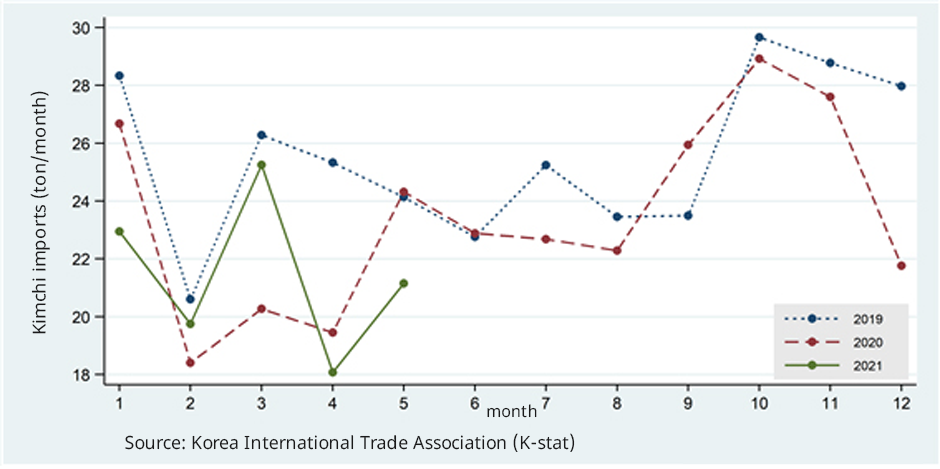
Figure 2. Korea’s monthly kimchi imports (Jan. 2019 - May 2021)


- World Institute of Kimchi, 86, Kimchi-ro, Nam-gu, Gwangju, 61755, Republic of Korea / TEL. +82.62.610.1700