



NEWS LETTER Fresh Story Vol. 34 Jan 2021
“Kimchi and pao cai differ in terms of their manufacturing and fermentation processes.”
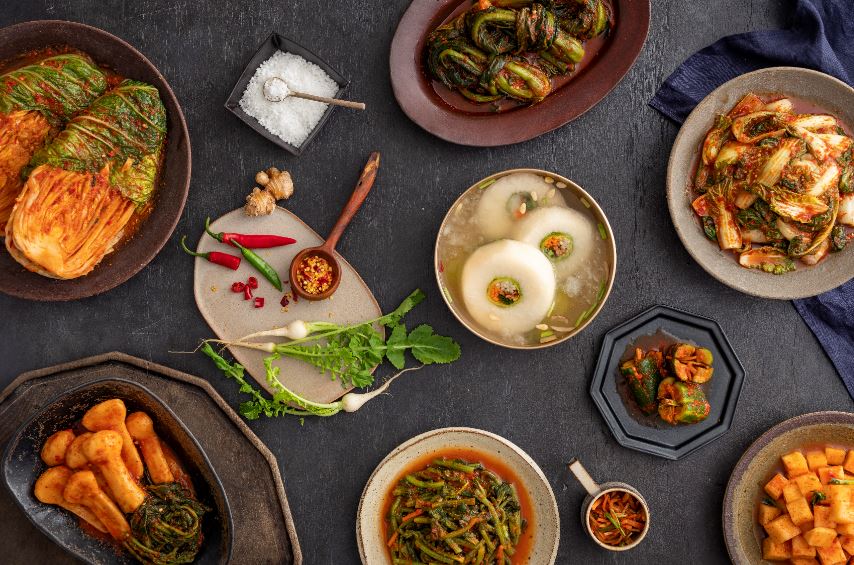
Recently, a Chinese media outlet reported that the industrial standard for ‘pao cai,’ a Chinese pickled vegetable delicacy, was applied to the international standard for the kimchi industry, which was far from the truth.
“There is a big difference between Korea’s kimchi and China’s pao cai in terms of their manufacturing and fermentation processes,” said the World Institute of Kimchi (hereinafter “WiKim”). “Kimchi is a unique Korean food that has been certified by the international standard of Codex Alimentarius (CODEX) in 2001.”
Pickling vegetables does not require advanced techniques, and pickled vegetable foods can be developed in any agricultural culture that experiences a change of season. In fact, there are various pickled foods besides kimchi, such as pao cai, tsukemono, sauerkraut, and pickles.
However, most pickled vegetables are simply pickled in salt or vinegar, whereas kimchi is prepared by first salting raw vegetables such as cabbage or radish, then seasoning the pickled vegetables with various other ingredients such as red pepper powder, green onions, garlic, and ginger for the second fermentation. Kimchi is the only food in the world that involves both a primary and secondary fermentation process.
It has already been proven by several studies that these two fermentation processes generate nutritional substances and lactic acid bacteria that are not originally present in the raw ingredients. This type of fermentation distinguishes kimchi from the pickled vegetables of other countries and makes it a renowned functional food.
Pao cai, for which an ISO standard was established this time, is a food in which various vegetables are added to a juice prepared by boiling water that contains salt, pepper, leaves, and coriander, and then cooling it. The creation of pao cai includes a flavoring stage, in which flavors are added to it. Since pao cai does not involve a secondary fermentation process, uses additional ingredients, and almost no fermentation occurs due to the sterilization process, it is totally different from kimchi.
Comparison of Kimchi and Pao Cai
| Category | Kimchi | Seasoned pao cai | Sichuan pao cai |
|---|---|---|---|
| Attribute | Fermentation | Pickling | Fermentation |
| Storage and distribution | Production of nutritional substances through continuous fermentation during storage and distribution | Sterilization | Sterilization |
| Type | General kimchi and watery kimchi | Mixed with seasoning | Similar to watery kimchi |
| Salinity | 1.5~2.5% | 5% | 2% |
| salting method | Short-term salting (less than 24 hours) → Associated with the texture and process | Several month to one year | No additional salting (just using salt water) |
| Spices | Red pepper, garlic, ginger, parsley, mustard leaves, etc. | A variety of spices | Red pepper, star anise, bay leaves, etc. |
| Image | 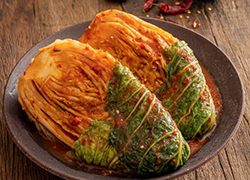 |
 |
 |
※ Image source: Kimchi (WiKim), pao cai (Chinese Pickled Vegetable Market Status, Shanghai aT Center, December, 2014.)
Because kimchi was clearly different from the pickled foods of other countries, the international standard for kimchi was finally established by CODEX under the name “KIMCHI” in 2001 to put an end to the prolonged controversy over its origin.
The Process of Establishing the Kimchi Codex Standard
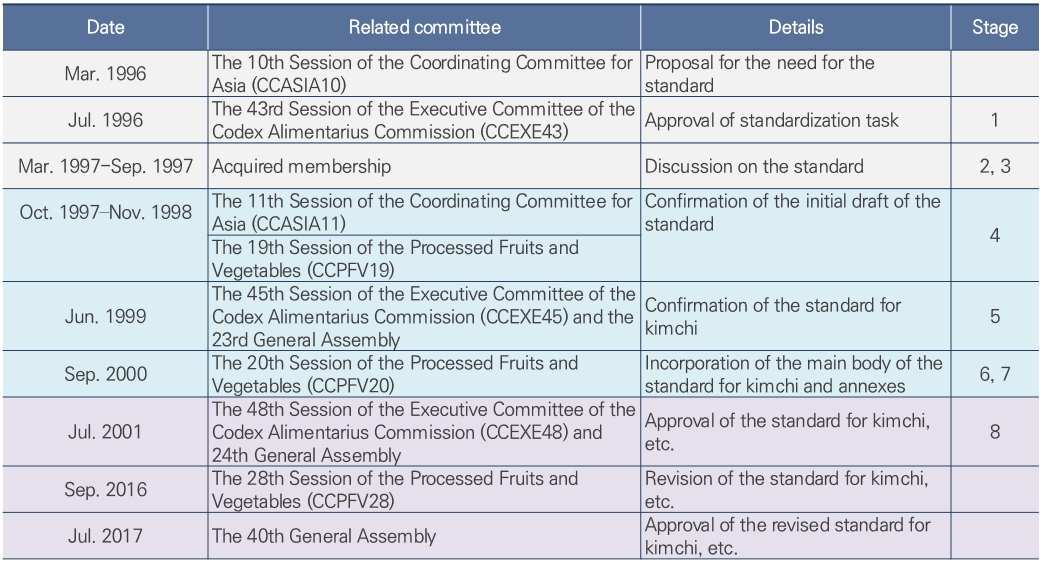
When establishing the standard for kimchi, in exchange for designating “kimchi” (and not “kimuchi”) as the standard name, some of the food additives suggested by Japan——an interested party——were partially included in the unified international standard. However, at the time, China was not involved in the process of establishing the CODEX standard, as the country recognized “kimchi” as an unfamiliar food.
In fact, in China, kimchi factories came into operation after the SARS outbreak in 2003, when the commerciality of kimchi was highlighted. Additionally, the increase in Chinese exports to Korea in the late 2000s led to an increase in their kimchi production. Given the recent increase in kimchi exports, the International Organization for Standardization (ISO) has established a standard for pao cai, but it clearly states that this standard does not apply to kimchi as the two are different food items.
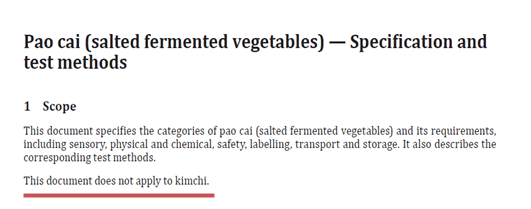
※ Source: ISO/FDIS24220 “Pao cai” (International Organization for Standardization, ISO)
Kimchi is the only fermented vegetable dish worldwide that has an international food standard. In other words, kimchi is the only fermented food that has been globally recognized for its quality, hygiene, and safety.
A recent analysis of the correlation between the differences in dietary behaviors of countries led a French research team to announce that Korea had a relatively small number of coronavirus deaths due to the Korean diet’s inclusion of a high quantity of kimchi. Kimchi is thus attracting worldwide attention.
Recently, as the global interest and popularity of kimchi has increased, it appears to have regained its controversiality, despite the Chinese media’s claims being unfounded. In the future, WiKim will continue to scientifically identify the excellence of kimchi and proliferate this information to prevent further controversy.


- World Institute of Kimchi, 86, Kimchi-ro, Nam-gu, Gwangju, 61755, Republic of Korea / TEL. +82.62.610.1700